Thriving Decades: Why Aging Well Is the Ultimate Performance Goal
6 min readThe longevity industry wants you to live longer. But the evidence-based fitness world says capability at 70, 75, and beyond is what actually matters.
TL;DR
The two most predictive metrics for how well you age are VO2 max and grip strength — both trainable. Train for what you want to do at 70.

The longevity industry has a number for you. More years. Longer lifespan. Live to 90, 100, 120. The implicit promise is that more time alive is the goal, and that the primary mechanism for getting there is medical intervention, supplement optimization, and the careful management of biomarkers.
The evidence-based fitness world is increasingly pointing at a different number: your age minus your current age. More precisely: the gap between your chronological age and the age at which you can no longer do the things that make life worth living. The goal is not lifespan. It is healthspan — and healthspan is not about biomarkers. It is about capability.
What the Research Actually Says About Aging
The most predictive single metric for how well you will age is not your cholesterol panel, your inflammatory markers, or your telomere length. It is your VO2 max — the measure of your maximum aerobic capacity.
VO2 max declines at approximately 10% per decade after age 30, accelerating after 60. But the rate of decline is not fixed — it is heavily influenced by training. A 70-year-old with a VO2 max in the "high" range for their age has a lower mortality risk than a 50-year-old with a "low" VO2 max. The fitness of your cardiovascular system is more predictive of when you will die than almost any other measurable variable.
The second most predictive metric is grip strength — a proxy for overall muscular strength and, more specifically, for the preservation of fast-twitch muscle fibers that decline sharply after 50. Grip strength is one of the most replicated findings in all of longevity research: low grip strength in midlife predicts earlier mortality more reliably than blood pressure, cholesterol, or smoking status.
These two metrics — cardiovascular capacity and muscular strength — are not genetic lotteries. They are trainable. This is the central insight of capability-focused aging: the things that predict how well you age are the things you can directly influence through training.
The 5 Evidence-Based Exercises for Aging Well
The American College of Sports Medicine (ACSM), ACE Fitness, and a substantial body of peer-reviewed research point to a consistent cluster of exercise modalities that have the strongest evidence for preserving capability into later decades.
Zone 2 cardiovascular training. This is low-intensity aerobic work — the kind you can sustain for 45 to 60 minutes while still holding a conversation. Zone 2 training builds mitochondrial density in muscle cells, improves fat oxidation, and is the foundation of cardiovascular fitness that preserves VO2 max. For most people, this means walking, cycling, swimming, or rowing at a pace where you are breathing but not gasping. Three to five hours per week is the evidence-based target.
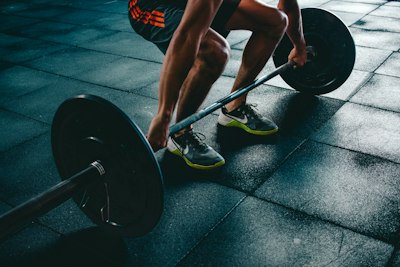
Heavy resistance training. The evidence for lifting heavy is unambiguous: it preserves bone density, muscle mass, and neuromuscular function in ways that light resistance training does not replicate. "Heavy" is relative to your current level, but the target is loads that you can lift for 5 to 8 repetitions before reaching failure. Two to three sessions per week, targeting major muscle groups, produces measurable functional benefits in older adults within 12 weeks.
Zone 5 intervals. High-intensity interval training — brief, intense efforts that push you to 85 to 95% of maximum heart rate — produces adaptations in cardiovascular and muscular systems that Zone 2 training alone cannot. The ACSM notes that HIIT protocols of 10 to 30 minutes (including warmup and recovery) are sufficient for significant cardiovascular improvements even in previously sedentary adults. One to two sessions per week is sufficient; more does not add benefit and increases injury risk.
Balance and proprioception work. Falls are one of the leading causes of injury and functional decline in older adults. The ability to recover balance quickly — proprioceptive capacity — declines with age but can be trained. Single-leg balance work, balance board exercises, and movement patterns that challenge stability (yoga, tai chi, martial arts forms) all have evidence for fall prevention. Five to ten minutes per day is sufficient as a supplement to the other modalities.
Mobility work. The range of motion in major joints — hips, thoracic spine, shoulders — declines with age due to changes in soft tissue elasticity and joint capsule stiffness. This matters not just for performance but for injury prevention. Daily mobility work targeting the major joints, especially the hips and thoracic spine, preserves the movement capacity that makes the other training modalities accessible and sustainable.
The Question That Reframes Everything
Most fitness programming is built around aesthetics, performance metrics, or weight loss. These are fine motivations — but they are the wrong frame for aging well.
The right question is not "how do I look at 50?" or "what should my resting heart rate be?" It is: what do I want to be able to do at 70? At 75? At 80?
This question is specific to every individual. For some people, it is hiking steep trails. For others, it is playing with grandchildren on the floor. For others, it is continuing to do their own yard work, or travel without assistance, or practice a sport they love. The specificity matters because it determines what you train — and because it makes the abstract goal of "aging well" concrete and motivating.
The Anti-Aging Industry vs. The Evidence
The supplement industry wants you to believe that resveratrol, NAD+, metformin, and rapamycin will move the needle on how you age. The biomarker optimization crowd wants you to track C-reactive protein, fasting insulin, and telomere length. Some of this has merit — metformin has legitimate evidence, and certain interventions do appear to modulate aging pathways.
But the effect sizes are small compared to what consistent exercise produces. A 2018 study in Preventive Medicine found that even low amounts of physical activity — as little as 15 minutes per day — was associated with a 14% reduction in mortality risk compared to inactivity. A 2020 review in British Journal of Sports Medicine found that meeting the minimum recommended activity guidelines reduced all-cause mortality risk by 20-30%.
No supplement on the market has that level of evidence. The return on investment for exercise — in terms of years lived, quality of life preserved, and functional capacity maintained — dwarfs anything the longevity industry is selling.
Building Your Capability Stack
Think of your training as a capability portfolio. Different modalities contribute different elements to the whole:
- Zone 2 cardio: Cardiovascular reserve, mitochondrial health, endurance base
- Heavy resistance: Strength, bone density, muscle mass, metabolic health
- Zone 5 intervals: Cardiovascular ceiling, insulin sensitivity, fat oxidation
- Balance work: Fall prevention, proprioception, nervous system resilience
- Mobility: Movement range, injury prevention, quality of life
The minimum viable dose for each:
- Zone 2: 150 minutes per week
- Resistance: 2-3 sessions per week
- Zone 5: 1-2 sessions per week
- Balance: 5-10 minutes daily
- Mobility: 10-15 minutes daily
This is not an enormous time investment — roughly 4-5 hours per week for most people. The return is not just years added to your life. It is life added to your years.
The Starting Point
If you are currently sedentary, the best time to start is yesterday. If you are currently active but not training for capability, the reframe is simple: pick the physical activities you most want to maintain into your 70s and 80s, and train specifically for those.
Want to hike? Build your VO2 max and leg strength. Want to play with grandchildren? Prioritize full-body strength and hip mobility. Want to travel independently? Work on balance, endurance, and grip strength.
The longevity industry will keep selling you the number. The evidence says train for the life you actually want to live.